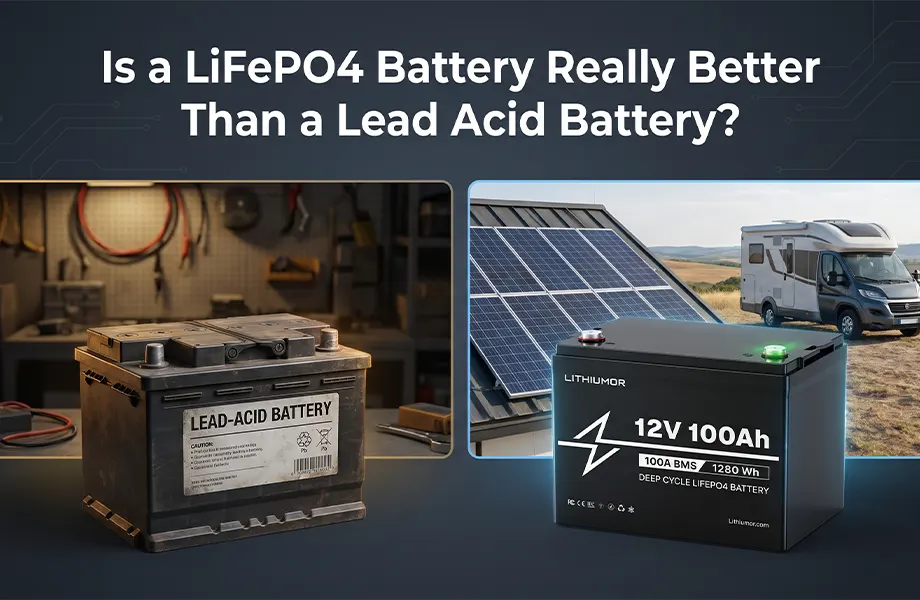
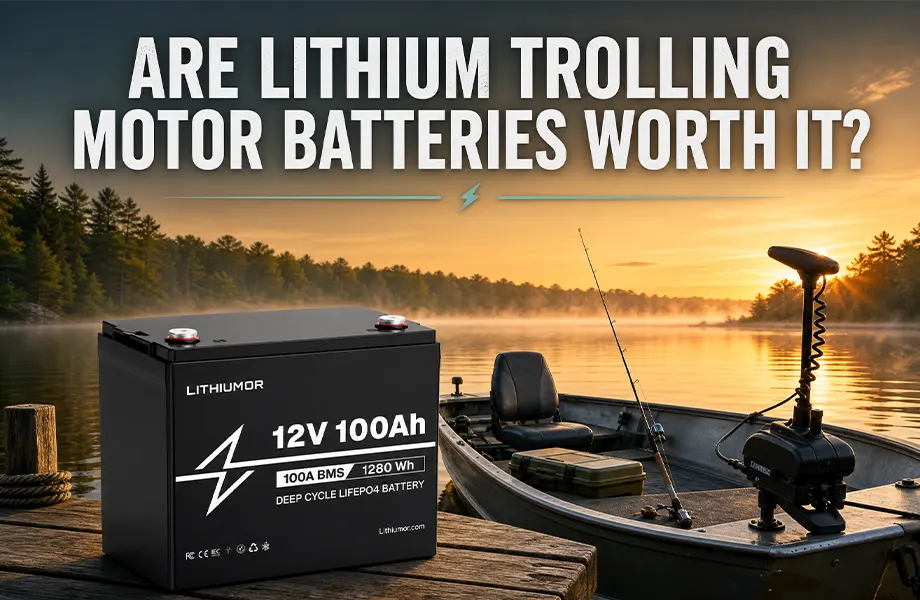
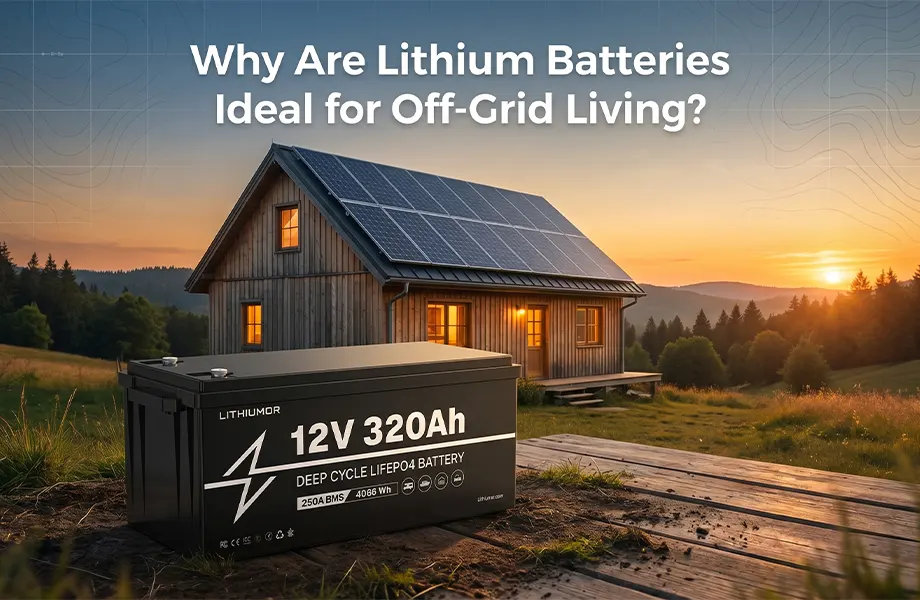
If you’ve been shopping for a deep cycle battery, you’ve likely run into this question more than once. Lead acid batteries have been around for over 150 years, they’re familiar, and they’re cheap upfront. So why does everyone seem to be switching to LiFePO4?
The short answer: because the numbers make a strong case. But the full answer is a bit more nuanced, and that’s exactly what this post is here to unpack. We’ll walk through the real differences between LiFePO4 and lead acid batteries, across the factors that actually matter when you’re making a buying decision.
What Is a LiFePO4 Battery?
LiFePO4 stands for lithium iron phosphate, which describes the chemistry inside the battery. Unlike other lithium battery types, lithium iron phosphate uses iron and phosphate in its cathode, which makes it one of the most thermally stable and chemically safe lithium chemistries available.
That stability matters. It’s a large part of why the LiFePO4 battery has become the go-to choice for solar energy storage, RV builds, marine applications, and off-grid setups where reliability and safety aren’t negotiable.
At Lithiumor, our entire product lineup is built around LiFePO4 technology, because we believe it’s the right chemistry for people who need power they can actually count on.
What Is a Lead Acid Battery?
Lead acid batteries were invented in 1859 and are still in widespread use today. That kind of staying power says something. They come in a few main forms: flooded (also called wet cell), AGM (absorbent glass mat), and gel. Each has slightly different characteristics, but they all share the same fundamental electrochemistry.
Lead acid batteries power car starters, backup systems, golf carts, and a whole range of other applications. They’re well understood, widely available, and inexpensive to manufacture. For many years, they were simply the only practical option for deep cycle use.
How Long Does Each Battery Actually Last?
This is where the comparison starts to shift noticeably in favor of lithium.
A quality LiFePO4 deep cycle battery typically delivers 5000 to 6000 charge cycles, often at DOD(depths of discharge)between 80% and 100%. A lead acid battery, by contrast, generally holds up for 300 to 500 cycles, and that’s when it’s discharged no deeper than 50 percent each time.
What does that mean in practice? If you cycle your battery once a day, a lead acid battery might last one to two years before its capacity degrades significantly. A LiFePO4 battery used under the same conditions could last eight to fifteen years or more.
That’s not a small gap. When you factor in replacement costs over a decade, the battery that looked more expensive at the start often turns out to be the more affordable choice over time.
How Much of the Battery Can You Actually Use?
Depth of discharge, or DoD, refers to how much of a battery’s total capacity you can draw from before recharging it. This is one of the more overlooked differences between the two chemistries.
With lead acid, it’s generally recommended to stay above 50% SOC(state of charge). Go deeper regularly, and you shorten the battery’s life considerably. That means a 100Ah lead acid battery effectively gives you around 50Ah of usable capacity in real world use.
A LiFePO4 battery can be safely discharged to 80% or even 100%without the same cycle life penalty. So that same 100Ah lithium LiFePO4 battery gives you 80 to 100Ah of usable energy. In other words, you may not need as large a battery bank as you think, which offsets some of the upfront cost difference.
Does It Matter for Your Application?
For anyone building an RV system, fitting batteries into a boat, or loading gear into a camper van, weight is a real concern.
A LiFePO4 battery is typically about half the weight of a lead acid battery with the same rated capacity. A 100Ah AGM battery, for example, might weigh around 60 to 70 lbs. A comparable LiFePO4 deep cycle battery often comes in at 25 to 30 lbs.
That weight reduction adds up quickly in multi-battery setups, and it makes installation and repositioning significantly easier. Less weight also means better fuel efficiency for vehicles and less strain on mounting structures.
Charging Speed and Efficiency
Lead acid batteries need to be charged carefully. They require a multi-stage charging process and are sensitive to both overcharging and undercharging. Charge them too fast, and you risk damaging the cells. Leave them at a partial state of charge for too long, and sulfation starts to form on the plates, which permanently reduces capacity.
LiFePO4 batteries are more tolerant. They accept higher charge currents without the same level of risk, which means faster recharge times. They’re also more efficient at storing the energy you put into them.
The round-trip efficiency of a lithium LiFePO4 battery typically falls in the range of 95% to 99%. Lead acid sits closer to 70% to 85%. In a solar storage setup, that difference in efficiency means more of your harvested energy actually makes it into usable power, rather than being lost as heat.
Maintenance Requirements
If you’ve ever maintained a flooded lead acid battery, you know the routine: check the water level, top off with distilled water, inspect the terminals for corrosion, make sure the area is ventilated because the battery off-gasses hydrogen during charging. It’s not complicated, but it’s time and attention that adds up.
AGM and gel batteries require less maintenance than flooded types, but they still need careful charging and are sensitive to overcharging.
LiFePO4 batteries are sealed and require no routine maintenance. There’s no water to check, no off-gassing under normal conditions, and no sulfation to worry about. For people living off-grid or on the road, that simplicity is genuinely valuable.
Upfront Cost vs. Long-Term Value
Let’s be straightforward about this: a LiFePO4 battery costs more upfront. Depending on the capacity and brand, the price difference can be substantial.
But cost-per-cycle tells a different story.
If a 100Ah AGM battery costs $150 and lasts 400 cycles, your cost per cycle is about $0.38. If a 100Ah LiFePO4 battery costs $350 and lasts 3,000 cycles, your cost per cycle drops to around $0.12. Over the same ten-year period, you might replace the lead acid battery four or five times while your LiFePO4 battery is still performing well.
That said, lead acid still makes sense in certain situations. If you need a battery for occasional, low-cycle use, if budget is the primary constraint, or if you’re powering a simple backup system that rarely runs, lead acid can be a practical choice. The goal isn’t to dismiss the technology. It’s to help you pick the right tool for your actual situation.
Which Battery Is Right for You?
Here’s a quick reference based on common use cases:
Solar and off-grid energy storage: LiFePO4 is the better fit. The higher efficiency, longer cycle life, and deeper usable capacity make it well suited for daily cycling in energy storage systems.
RV and marine applications: LiFePO4 is the stronger choice. The weight savings, low maintenance, and consistent output under load are all meaningful advantages when you’re living or traveling off-grid.
Occasional backup or emergency power: Lead acid can work fine here, particularly AGM. If the battery sits for long periods and only cycles a few times a year, the longevity advantage of LiFePO4 matters less.
Tight upfront budget, low cycle application: Lead acid remains a viable option. Just factor replacement frequency into your decision before committing.
If you’re looking for a reliable LiFePO4 deep cycle battery for solar, RV, or off-grid use, Lithiumor’s battery lineup is built specifically for these applications, with safety and long service life as the starting point, not an afterthought.
Conclusion
So, is a LiFePO4 battery really better than a lead acid battery? For most deep cycle applications, yes. The usable capacity is higher, the cycle life is significantly longer, the weight is lower, the maintenance is minimal, and the efficiency is better. The upfront price is also higher, but for anyone using their battery regularly, the total cost over time tends to favor lithium.
The “cheaper” battery isn’t always the one with the lower sticker price. It’s the one that costs you less by the time you actually need to replace it.
If you’re ready to explore your options, take a look at Lithiumor’s deep cycle LiFePO4 battery range and find the right fit for your setup.