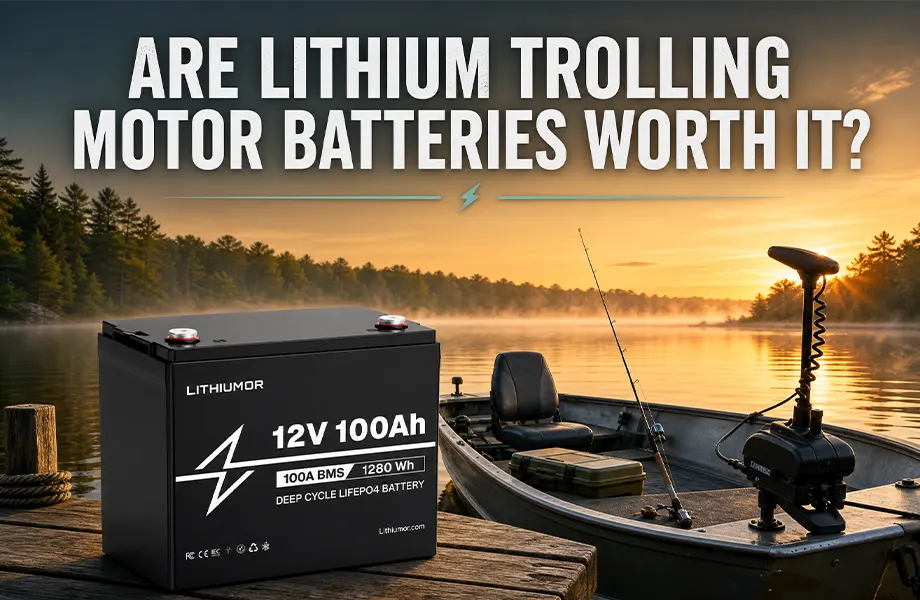
If you’ve spent any time shopping for a new trolling motor battery, you’ve probably done a double take at the price of lithium. Compared to a standard AGM or flooded lead-acid battery, a lithium LiFePO4 battery can cost two to four times as much upfront. It’s a fair thing to question.
But the price tag alone doesn’t tell the full story. For a lot of anglers, the switch to a lithium trolling motor battery is one of those purchases they wish they’d made sooner. For others, it genuinely might not be the right fit. This article breaks it all down so you can make the call that actually makes sense for your situation.
What Makes a LiFePO4 Battery Different from Other Trolling Motor Batteries
Not all lithium batteries are the same. LiFePO4 (lithium iron phosphate) is a specific chemistry that stands apart from other lithium types, and it’s the one that’s become the standard for marine and deep cycle applications.
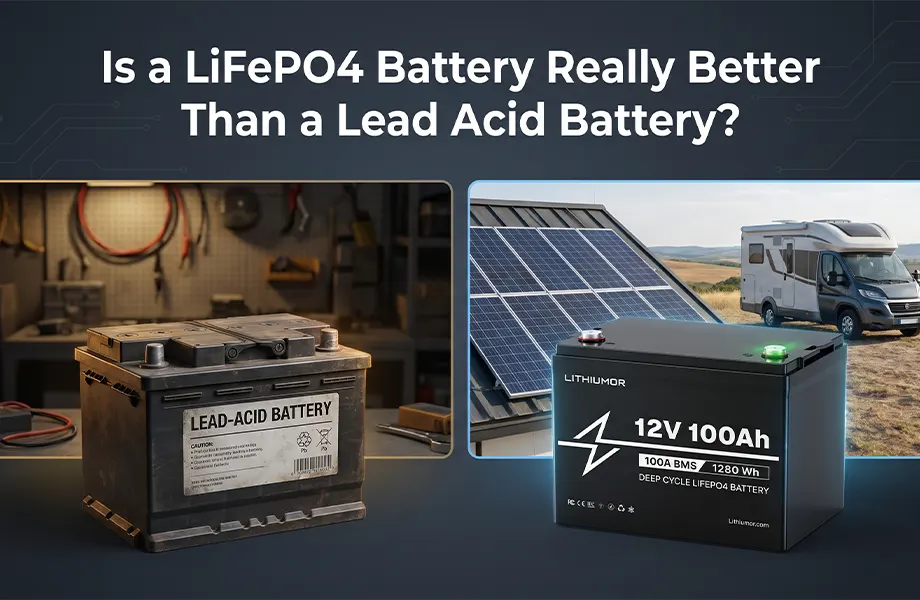
Standard lead-acid and AGM batteries work by cycling through chemical reactions between lead plates and sulfuric acid. They’re heavy, they lose capacity over time, and they don’t respond well to being deeply discharged on a regular basis. LiFePO4 batteries use a completely different internal structure, which gives them a more stable voltage output, a much longer service life, and the ability to handle deep discharges without the same kind of degradation.
For trolling motor use specifically, that stable voltage curve matters more than people often realize. A lead-acid or AGM deep cycle battery starts strong and gradually loses power as it drains. By the time you’re at 50 or 60 percent discharge, your motor is running noticeably slower. A LiFePO4 battery holds a consistent voltage from nearly full charge right down to low capacity, which means your trolling motor runs at the speed you set it, not at whatever speed a tired battery can manage.
The Weight Argument, and Why It Matters More Than You Think
One of the first things people notice when they pick up a lithium battery is how light it is. A typical 100Ah AGM deep cycle battery weighs somewhere between 60 and 70 lbs. A comparable LiFePO4 battery often comes in under 30 lbs, sometimes significantly under.
That difference is not trivial once it’s on the water.
For bass boat anglers, reducing weight at the bow or stern changes the trim of the boat. Less weight forward means better fuel efficiency at cruising speed and a cleaner hole shot. For kayak and canoe fishermen, saving 30 to 40 lbs per battery is genuinely significant. It affects paddling effort, how the vessel tracks, and in some cases whether you can even load the boat comfortably on your own.
If you’re running a 24V or 36V trolling motor system with multiple batteries, those weight savings stack. Two or three lithium batteries instead of two or three AGM batteries can free up 60 to 100 lbs from your boat, and that adds up in ways you’ll feel every trip.
Run Time and Usable Capacity: The Numbers People Get Wrong
This is probably where the most confusion lives when people compare lithium and AGM batteries, and it’s worth slowing down on.
When a battery is rated at 100Ah, that number represents its total stored capacity. But how much of that capacity you can actually use before damaging the battery or losing usable power is a different number entirely.
With a flooded lead-acid or AGM deep cycle battery, the generally accepted guideline is to discharge no more than 50 percent of the rated capacity. Going deeper than that on a regular basis shortens the battery’s life considerably. So in practice, a 100Ah AGM battery gives you about 50Ah of usable capacity per charge.
A LiFePO4 battery is rated for discharges down to 80% to 100% of its capacity without meaningful damage to the cells. That same 100Ah rating on a lithium battery translates to 80 to 100Ah of usable power.
Put simply: a 100Ah lithium trolling motor battery gives you roughly twice the usable run time as a 100Ah AGM.
For a full day on the water with a 55 lb or 80 lb thrust trolling motor, that difference is the gap between making it home with power to spare and reaching for your paddle in the middle of the afternoon.
On top of that, the voltage sag issue mentioned earlier compounds this. Even when an AGM battery technically has charge left, the voltage under load has dropped enough that your motor can’t maintain its set speed. With a LiFePO4 battery, you get consistent output until the battery is genuinely depleted.
Cycle Life and Long-Term Cost: Where Lithium Becomes the Cheaper Option
The upfront price difference is real. But looking at cost per cycle over the battery’s usable life usually changes the math.
A quality AGM deep cycle battery is typically rated for somewhere between 300 and 500 full charge cycles before its capacity has degraded to the point where it needs replacing. A LiFePO4 battery from a reputable manufacturer is generally rated for 5,000 to 6,000 cycles or more under normal conditions.
Here’s a simple way to think about it. If you fish 100 days per year and charge your battery after each trip, a 400 cycles AGM battery lasts about four seasons. A 2,000 cycles LiFePO4 battery at that same rate lasts 20 years.
If the AGM battery costs $200 and you replace it every four years, that’s $50 per year. If the lithium battery costs $600 and lasts 20 years, that’s $30 per year. And that’s before factoring in the AGM’s reduced usable capacity, which might push you to buy a higher Ah rating to compensate.
The math shifts depending on how often you fish and what you pay, but for anyone who uses their trolling motor regularly, lithium becomes the more cost-effective battery over time. The upfront cost is a real obstacle; the long-term cost usually is not.
Charging a Lithium Trolling Motor Battery: What to Know Before You Buy
This is a practical point that sometimes gets overlooked until after the purchase. LiFePO4 batteries require a lithium-compatible charger. This is not optional.
Standard lead-acid and AGM chargers use a charging profile designed for those chemistries. Using one on a LiFePO4 battery can result in improper charging, reduced battery life, or in some cases, safety issues. A dedicated lithium charger uses the correct constant current, constant-voltage (CC/CV) profile that LiFePO4 cells need.
The good news is that LiFePO4 batteries accept a charge much faster than AGM. Where a deeply discharged AGM battery might need six to eight hours to fully recharge, a lithium battery can often be back to full in two to four hours with an appropriate charger.
For anglers running 24V or 36V systems using multiple batteries wired in series, you’ll want to confirm your onboard charger is compatible with lithium chemistry across all banks. Many modern multi-bank marine chargers include a lithium mode, but double-checking before you buy is worth the effort.
Where Lithium Falls Short: Being Honest About the Limits
Any fair review of lithium trolling motor batteries has to include the honest negatives.
The upfront cost is a genuine barrier: If you fish a few weekends a year and you’re not particularly bothered by carrying a heavier battery or running out a little earlier, a quality AGM deep cycle battery at a fraction of the price is a perfectly reasonable choice. The long-term savings argument only works if you actually fish enough to accumulate cycles.
Cold weather performance requires attention: LiFePO4 batteries have a built-in Battery Management System (BMS) that protects the cells from damage. One of those protections is a cutoff during charging in very cold temperatures, typically below around 32°F (0°C). The battery can generally still discharge and power your motor in cold weather, but it won’t accept a charge when temperatures drop below that threshold. If you’re an ice angler or fish in genuinely cold conditions during early spring or late fall, this is worth understanding before you buy. Some batteries include a self-heating function to address this; not all do.
Quality varies widely across brands: Not every lithium battery on the market is built to the same standard. Cell quality, BMS capability, and build quality differ significantly between manufacturers. A low-cost lithium battery with cheap cells and a poorly designed BMS can underperform and fail early. When evaluating any LiFePO4 battery, look at the actual cycle life rating, the BMS specifications, operating temperature range, and what kind of warranty the manufacturer stands behind.
Who Should Actually Switch to a LiFePO4 Trolling Motor Battery?
Based on everything above, the answer isn’t the same for everyone.
Lithium makes the most sense if you:
- Fish frequently, say more than 30 to 50 days per year
- Run a larger or higher-thrust trolling motor (55 lb thrust and above)
- Care about boat weight or run a kayak, canoe, or smaller aluminum boat
- Run a 24V or 36V trolling system where weight savings multiply
- Want consistent motor speed from the first hour to the last
- Are tired of replacing batteries every few seasons
AGM or lead-acid may still make sense if you:
- Fish occasionally and don’t put heavy demand on your battery
- Already have a large AGM battery that still has several seasons of life in it
- Are on a tight budget and the upfront difference is a meaningful obstacle
- Have a simple, low-demand setup where the extra run time won’t be noticed
At Lithiumor, our deep cycle LiFePO4 batteries are designed specifically for demanding applications like trolling motors, where consistent output, reliable cycle life, and weight savings make a real difference. If you’re ready to explore which battery fits your setup, our product pages include full specs and guidance to help you match the right Ah rating and voltage to your motor.
Conclusion
So, are lithium trolling motor batteries worth it?
For serious anglers and anyone who spends real time on the water, the answer is usually yes. You get more usable capacity from the same rated Ah, consistent power throughout the day, a significantly lighter package, and a service life that makes the long-term cost lower than it first appears.
But it’s not a universal answer. The honest version is: if you fish often enough and demand enough from your battery, a lithium LiFePO4 battery pays for itself. If you fish occasionally with a modest setup, a quality AGM deep cycle battery still does the job at a lower entry cost.
Know how you fish, understand what you’re actually getting for the price, and the decision usually becomes pretty clear.
Related posts